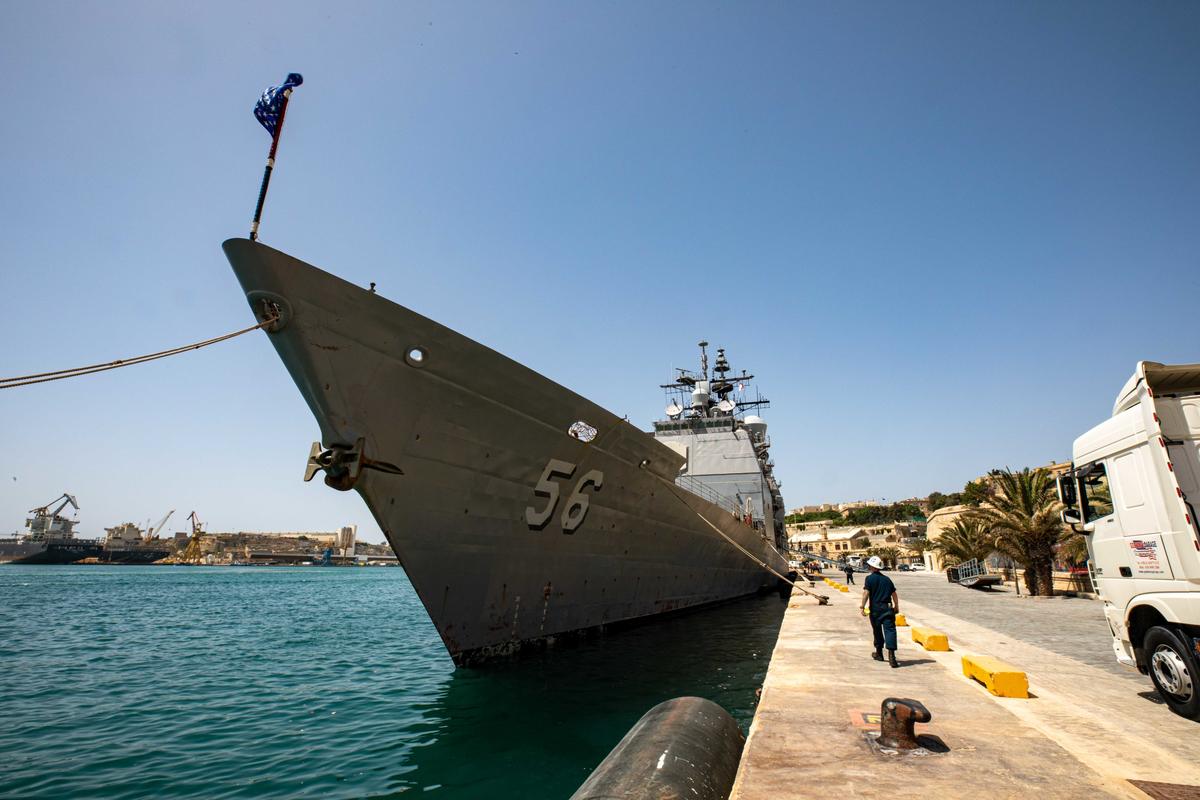
Part Six: Second Wind (2013–2022)
Chapter 22Last Deployment
When the ship came home from the long deployment of 2020, she was thirty-two years old, and by the usual accounting of a navy she was entering the last part of her working life. A Ticonderoga-class cruiser was designed for a service life of about thirty-five years. Whether the Navy would let her serve out the rest of them was undecided. The next three years, from the spring of 2021 to the autumn of 2023, were a struggle over that question, and in the middle of it she made one more deployment.
It is an odd thing to serve in a ship while the Navy argues in public about scrapping her. The sailors of the 2010s had read about it and gone on watch. The sailors of 2021 and 2022 served under the same cloud, with the difference that this time the date was real.
A new captain
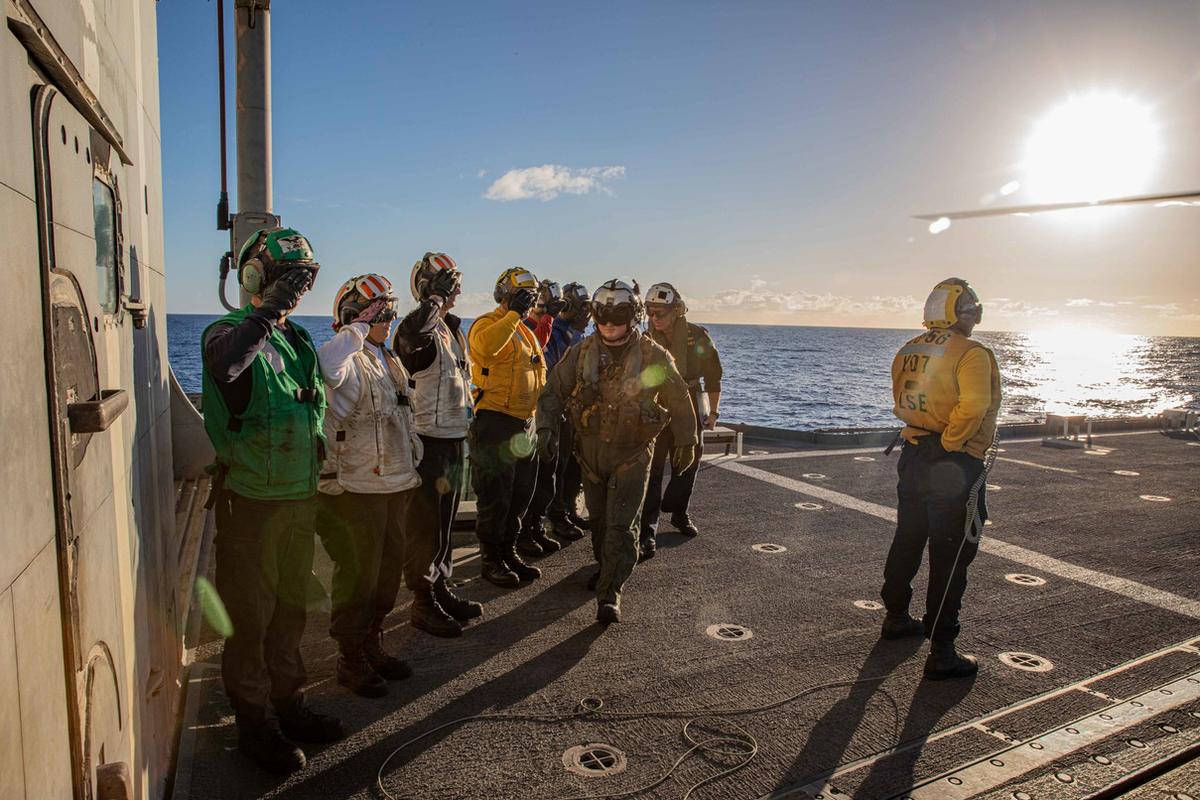
On 21 May 2021, at Naval Station Norfolk, Captain Christopher Marvin relieved Captain Edward Crossman as commanding officer in a change-of-command ceremony held aboard the ship. The Navy’s account of the ceremony described Crossman’s tour as a six-month deployment with Carrier Strike Group 10, during which the ship had served as the group’s air and missile defense commander. Crossman, it said, spoke of the self-sufficiency, drive and resilience that the crew of the “Gunslingers” had shown in the most adverse conditions.1 The wardroom’s name for the crew had lasted thirty-three years, whatever the crew thought of it.
Marvin was a native of rural northeastern Pennsylvania, a 1996 graduate of Pennsylvania State University, who had been commissioned through Officer Candidate School in 1998. His earlier sea duty had been in the engineering departments of the destroyer Chung-Hoon and the cruiser Chosin, and he had been the executive officer of a frigate and an amphibious ship before taking command of the littoral combat ship Detroit.1 He was an engineer by background, which was the right kind of captain for a ship whose plant was thirty-three years old. He would turn out to be the last captain the San Jacinto ever had: the twentieth in the ship’s own count, and the one who would take her through her final deployment and bring her to the pier at which she was decommissioned.2
In his first months aboard the Navy also honored the crew’s work under his predecessor. On 2 August 2021, Rear Admiral Brendan McLane, commander of Naval Surface Force Atlantic, presented the crew with a Navy Unit Commendation on behalf of the Secretary of the Navy, at a ceremony aboard the ship. The award recognized the crew’s leadership and hard work in support of the Eisenhower deployment of 2020.3 A Navy Unit Commendation is given to a ship or unit for outstanding service in action or in support of operations, and every member of the crew who served during the period is entitled to wear its ribbon.
Through the rest of 2021 she worked up with the Harry S. Truman Carrier Strike Group, whose staff was Carrier Strike Group 8, for a deployment in December. The ship’s chronology records short underways off the Virginia Capes in March and May, a three-week group sail with Truman in the operating areas from the Virginia Capes to Jacksonville that ended on 1 July, and a twenty-nine-day COMPTUEX that ended on 29 October.4, 17 The group sail took her back, with the same carrier, to the same waters off Florida where she had met Montpelier nine years before. The record does not say whether anyone aboard remarked on it.
In August 2021 the Navy Supply Systems Command’s fleet logistics center at Norfolk posted a solicitation, open to small businesses only, for the remodeling of booth seating, benches and tables, with Naval Station Norfolk and San Jacinto named as the place of delivery and responses due on 10 August. The notice does not say which space was meant, and the record does not show who received the work.16
A ship the Navy wanted to retire
| Hull | Ship | Planned status (2022 plan) | Decommissioned |
|---|---|---|---|
| CG-52 | Bunker Hill | Out of commission, in reserve | 22 Sep 2023 |
| CG-53 | Mobile Bay | Out of commission, in reserve | 10 Aug 2023 |
| CG-56 | San Jacinto | Logistics support asset | Ceremony 15 Sep 2023; NVR 29 Sep 2023 |
| CG-57 | Lake Champlain | Logistics support asset | 1 Sep 2023 |
| CG-69 | Vicksburg | Out of commission, in reserve | 28 Jun 2024* |
Source: The Navy’s FY2023 shipbuilding report (18 April 2022) gave each ship’s age at retirement as 35 to 37 years against a 35-year expected life. Decommissioning dates from Chapter 23 (wire summary of USNI News) except *Vicksburg, from Wikipedia (to be checked against the NVR). The Military Sealift Command later called San Jacinto out of commission in reserve. Sources: Chapters 22 and 23.
The deployment came at an unusual point in the history of her class. The Ticonderoga-class cruisers, twenty-seven of which were built, were the first warships to carry the Aegis combat system, and they were designed in the late 1970s and built in the 1980s to defend carrier groups against Soviet aircraft and missiles. By the 2010s the Navy had retired the oldest of them and was looking for a way to retire the rest. The ships were expensive to keep running; their crews were large, their equipment aging, and their need for major overhauls frequent. The Navy had also long argued that its money was better spent on newer destroyers. Congress, for its part, saw that the cruisers carried a very large share of the fleet’s missile launchers and that the fleet’s needs had not diminished, and over a number of years it forbade early retirements or insisted on modernization plans.
Both sides were right, which is why the argument lasted a decade. A cruiser’s hundred and twenty-two missile cells were real, and no destroyer had as many. The cracked superstructures, the worn plants and the sewage in the berthings were real too.
The fight came to a head in 2021 and 2022. In 2021 the Navy asked Congress to let it retire seven cruisers, and Congress declined, with the result, as Stars and Stripes summarized it the following year, that the Navy was forced to keep two of them.5 San Jacinto was already the subject of planning: in 2021 a Navy message spoke of a plan to decommission her and the cruiser Lake Champlain.6
The Navy’s request for fiscal year 2023, released in March and April 2022, set out the plan in full. It asked Congress to approve the retirement of twenty-four ships, five of them cruisers: Bunker Hill, Mobile Bay, San Jacinto, Lake Champlain and Vicksburg. Two of the five, San Jacinto and Lake Champlain, were to become what the Navy called Logistics Support Assets: ships taken out of service and, as the term is generally understood, held as a source of spare parts for others of their class, and not retained on the Navy’s register of ships. The other three were to be held out of commission, in reserve, a status the Navy abbreviates as OCIR.
The Navy’s report to Congress on the shipbuilding plan, dated 18 April 2022, lists the five cruisers among the 24 ships to be inactivated in fiscal year 2023, gives the age of each at retirement as 35 to 37 years against an expected service life of 35, and carries seventeen cruisers in all through its table of ships to be inactivated, the last two in fiscal year 2027. The press at the time reported that the Navy meant all the remaining cruisers to be gone by fiscal year 2027; the table lists seventeen, and the record does not reconcile the press statement with it. The report names a fiscal year and no day for each ship, and a fiscal-year inactivation schedule reported in the press listed San Jacinto for 30 June 2023.7 Her retirement was thus being scheduled while she was at sea on deployment. Her crew was standing air-defense watches over a carrier off a European war while a table in Washington listed the day their ship would become a parts bin.
The reasons the Navy gave were set down in that report. The cruisers, it said, had been the Navy’s premier air-defense command-and-control ships for over three decades, and that mission was passing to the newest Flight III destroyers. They were on average 35 years old, and the report judged that there would be little return on keeping them, given their poor reliability, affordability and lethality: the cost of repairing their poor material condition, and the continuing worries about their older sensors and their hull, mechanical and electrical systems, outweighed what they could add in their remaining service life. The report noted their large vertical-launch capacity and did not dispute it. It also stated that ships designated Logistics Support Assets, unlike those held in reserve, are not retained on the Naval Vessel Register, the Navy’s official list of its ships.7
So the job that had made her a cruiser, and had put a captain in command of her instead of a commander, was going to a destroyer. The class that had been designed as the cruiser’s cheaper successor in 1980 had, forty years on, grown into the ship that replaced her.
The plan was argued over in the committees and in the press, and the argument was not settled by the time the ship came home. For the Navy she was an old cruiser to be retired on a fixed schedule. She went to sea that December, one more time, as the escort of an aircraft carrier.
Deployment
The Truman Carrier Strike Group sailed from Norfolk at the beginning of December 2021, the carrier on the 1st and San Jacinto, by her own chronology, on the 2nd. Its units were the carrier, with Carrier Air Wing 1 embarked; the staff of Destroyer Squadron 28; the destroyers Bainbridge, Cole, Gravely and Jason Dunham, with others joining during the cruise; and San Jacinto.8 It was commanded by Rear Admiral Paul Spedero Jr., of Carrier Strike Group 8. Two of those names had history with her. Gravely had been the other escort in the screen on the afternoon of the collision. Cole had tied up with her in New York in 1999, the year before Aden.
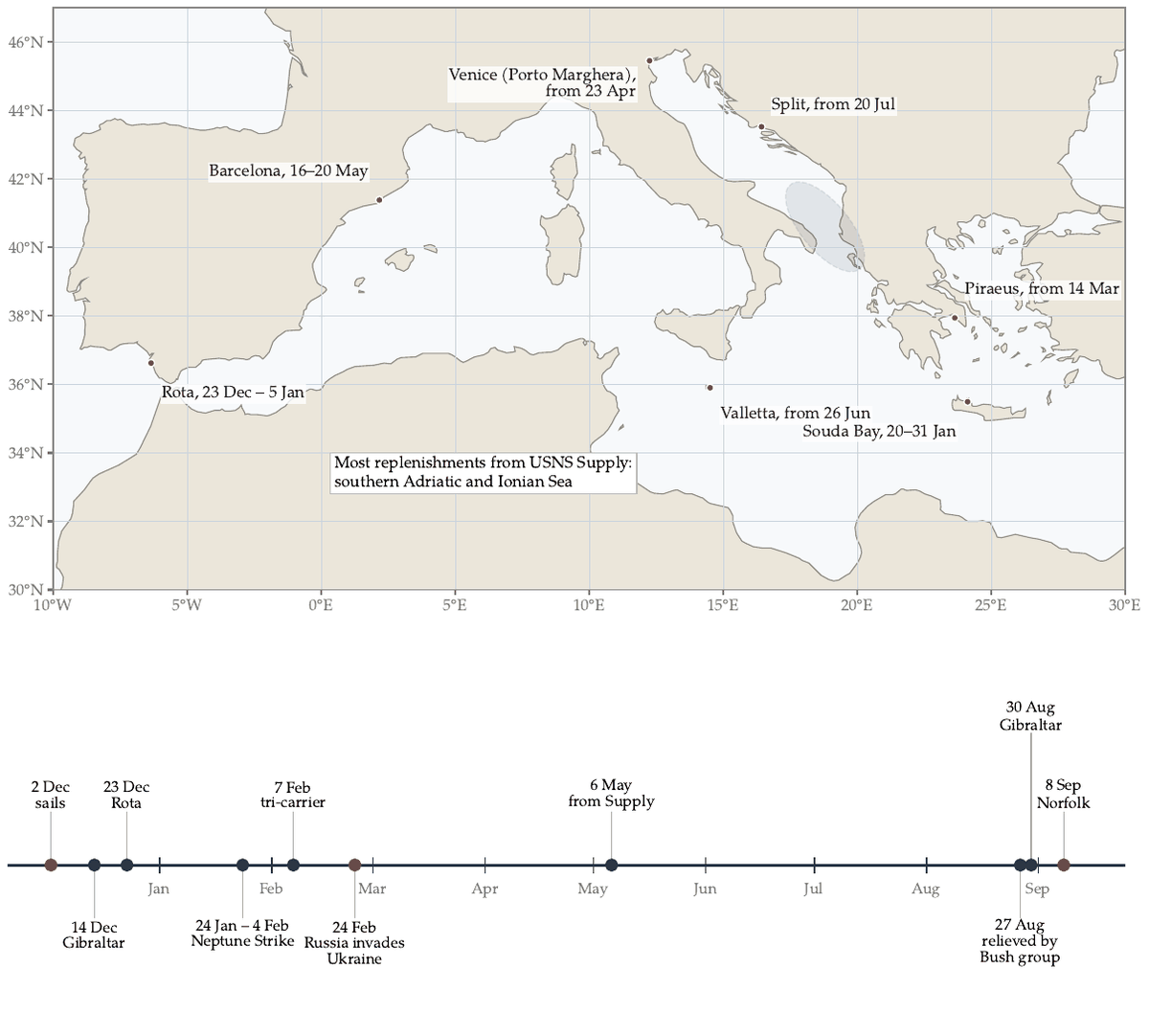
The Navy’s accounts say that the cruiser operated in the area of responsibility of U.S. Naval Forces Europe, the Mediterranean and its approaches, from 14 December.8 By her own chronology she refueled from the carrier on 9 December, passed the Strait of Gibraltar eastbound on the 14th, came back out on the 23rd and spent Christmas and the New Year at Rota, in Spain, before returning to the Mediterranean.17
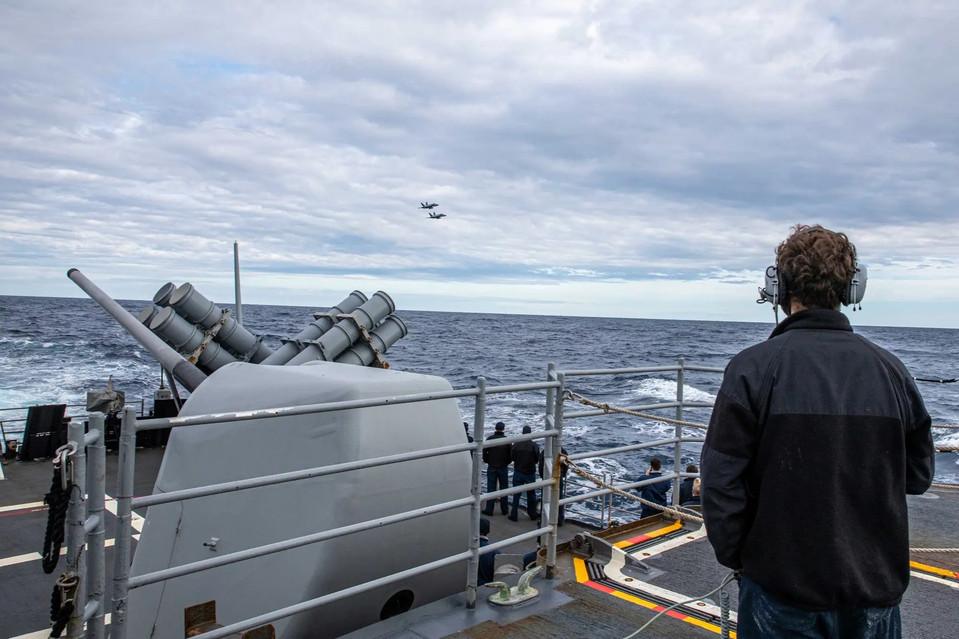
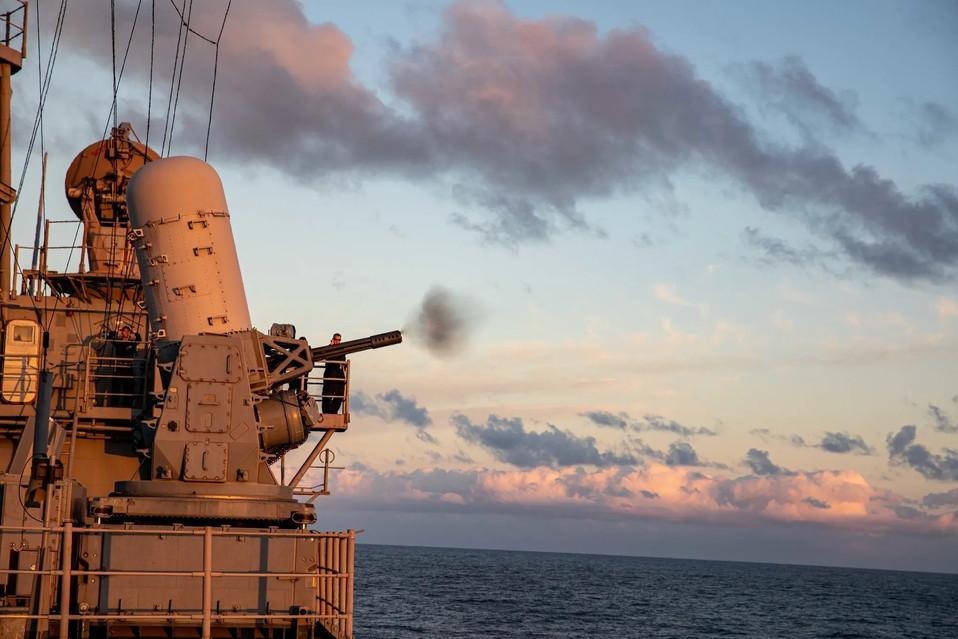
The winter’s first events were of the sort that make up a routine deployment. On 20 December the group held a passing exercise with ships of the Tunisian navy, an exercise of the kind that navies use to practice communicating and maneuvering together and that serve, as the phrase goes, as theater security cooperation. In late January and early February came something new. Between 24 January and 4 February the Truman was placed under NATO operational control for an exercise called Neptune Strike 22, conducted under the NATO command responsible for strike forces. It was the first time since the Cold War that a U.S. aircraft carrier had been put under the command of NATO, and it was designed to demonstrate that the alliance could bring the great striking power of a carrier group to bear at sea.9 San Jacinto, the Navy said, was a key player in it.8
On 2 February the group operated in the Adriatic with the Turkish frigate Göksu, and on 7 February the Truman operated together with the Italian carrier Cavour and the French carrier Charles de Gaulle, a dual and then a tri-carrier operation in the Mediterranean. The Navy took it as a demonstration of allied naval power. It also took place in the weeks when a Russian army was massed on Ukraine’s frontiers and the world was waiting to learn what it would do.9
24 February
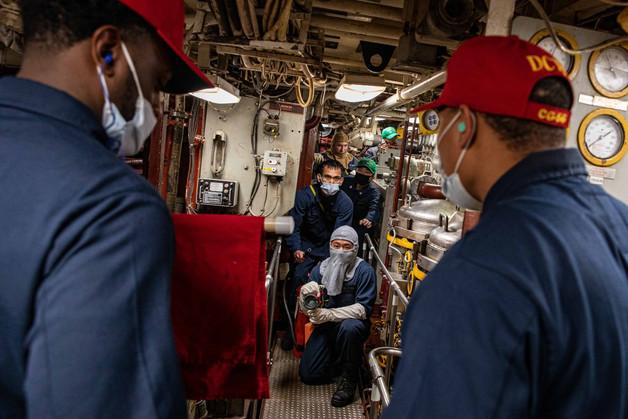
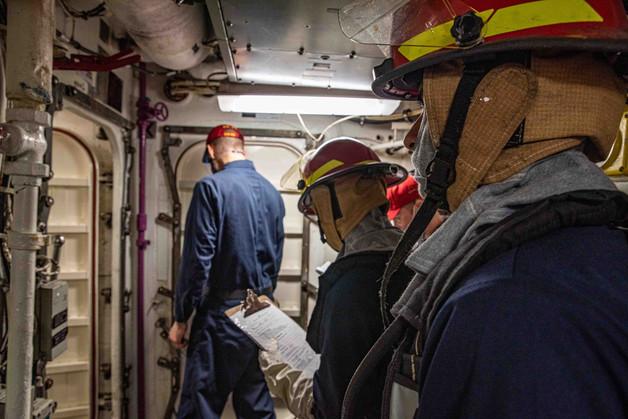
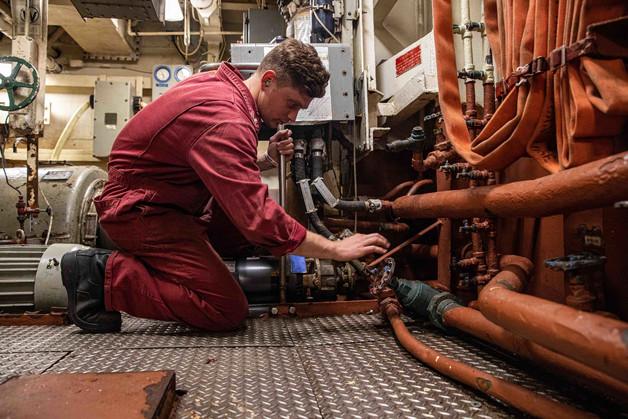
Russia invaded Ukraine on 24 February 2022. The Truman group was in the Mediterranean, and it stayed there. The mission of the American ships was not to enter the war, which remained a war between Russia and Ukraine in which neither NATO nor the United States was a combatant, but to deter its spread, and to reassure the alliance’s eastern and southern members. The carrier’s air wing flew enhanced air policing missions, patrols by armed aircraft that protect NATO members’ airspace, over the Adriatic, Ionian and Aegean Seas. In March, according to the U.S. Naval Institute, it was flying between sixty and ninety sorties a day.10
For a cruiser the work was an Aegis cruiser’s work. San Jacinto was in the air and missile defense role she had had in 2016 and 2020: the ship responsible for watching the sky and the sea around the carrier, tracking aircraft and missiles, and being ready to engage anything that threatened the group. Spedero, the group commander, described her at the end of the deployment as the strike group’s workhorse, which sailed with the Truman day and night and remained ready for any task. He said that the cruiser and the destroyers of the group were as vital as the carrier.11
There is a symmetry in it. She had been built to stand between a carrier and Russian missiles and bombers. Her first deployment, in 1989, had been to a Mediterranean where the Soviet squadron still shadowed the Sixth Fleet, and she had come home to find that war called off. For thirty years she did everything else: Tomahawks, embargoes, dhows, pirates, oil terminals. On her last deployment she was back in the same sea, glued to a carrier, standing the air-defense watch while a Russian war was fought a few hundred miles away. The ship the Navy had decided was too old to keep ended her career doing exactly the job she had been designed for, within reach of the country she had been designed to face.
Ports, exercises and the long spring
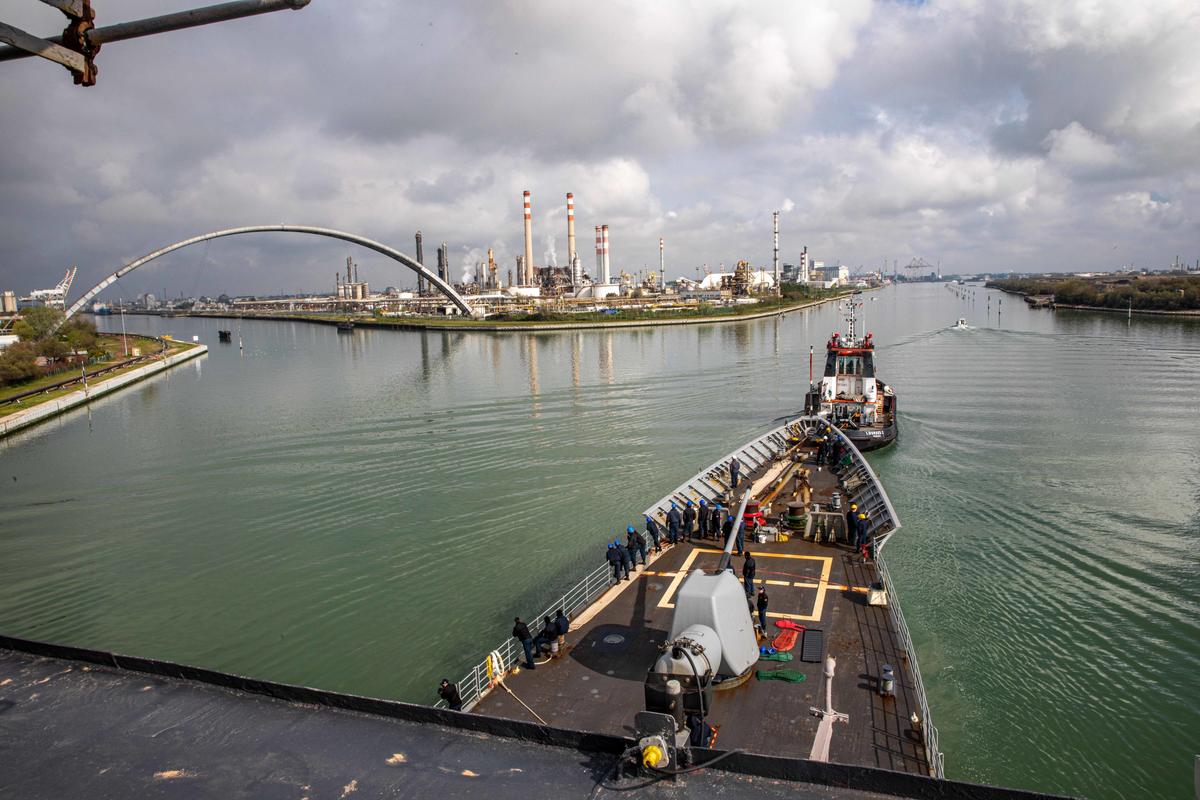
The cruise took her into port at Rota over Christmas and the New Year (23 December to 5 January); at Souda Bay, on Crete, from 20 to 31 January; at Piraeus, for four days of liberty in Athens from 14 March; at Porto Marghera, for Venice, from 23 April; at Barcelona from 16 to 20 May; at Valletta, Malta, from 26 June; and at the Lora naval base at Split, Croatia, from 20 July.12, 17 After the 206 days of 2020, seven ports in nine months was a different Navy. Split was on the list, as it had been in 2013.
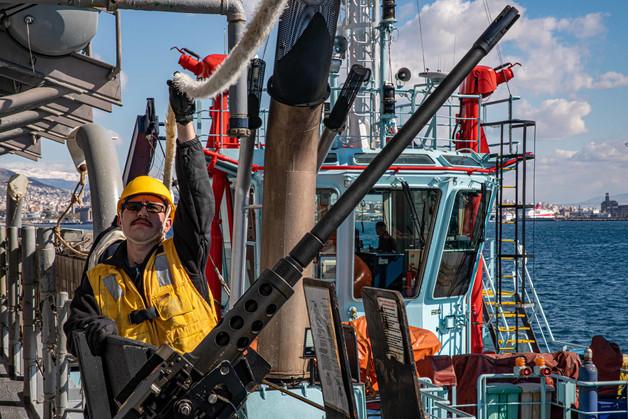
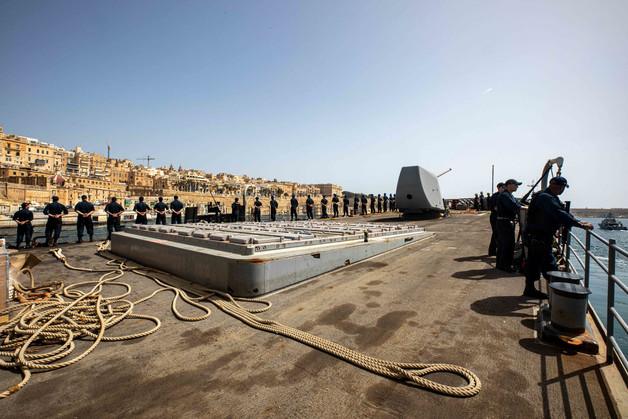
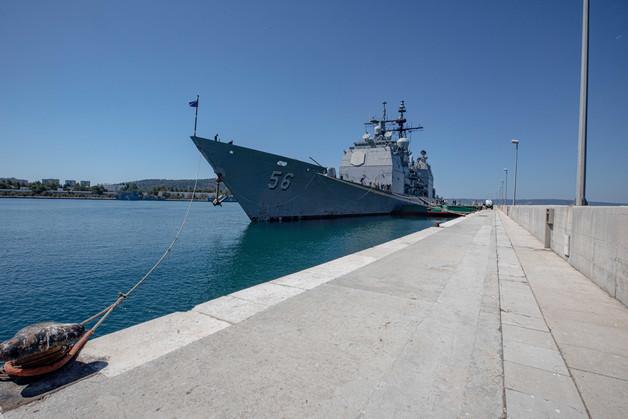
The cruiser’s supplies came, as they did on every long deployment, from the Military Sealift Command’s oilers and stores ships, among them USNS Supply, from which she took fuel and stores on 6 May 2022. Her chronology records at least ten replenishments from Supply between January and the end of August, most of them in the southern Adriatic and the Ionian Sea, and one from the dry cargo ship Robert E. Peary northwest of Sardinia on 17 June.12, 17 In the late spring the group took part in Neptune Shield, a second NATO exercise, designed to practice the integration of a carrier strike group with an amphibious ready group and a Marine expeditionary unit, and in the summer it exercised with ships of the French and Italian navies and with NATO’s standing maritime group.13 Early in the deployment the group had also operated with a Norwegian frigate, Fridtjof Nansen, which returned to Norway in May.11
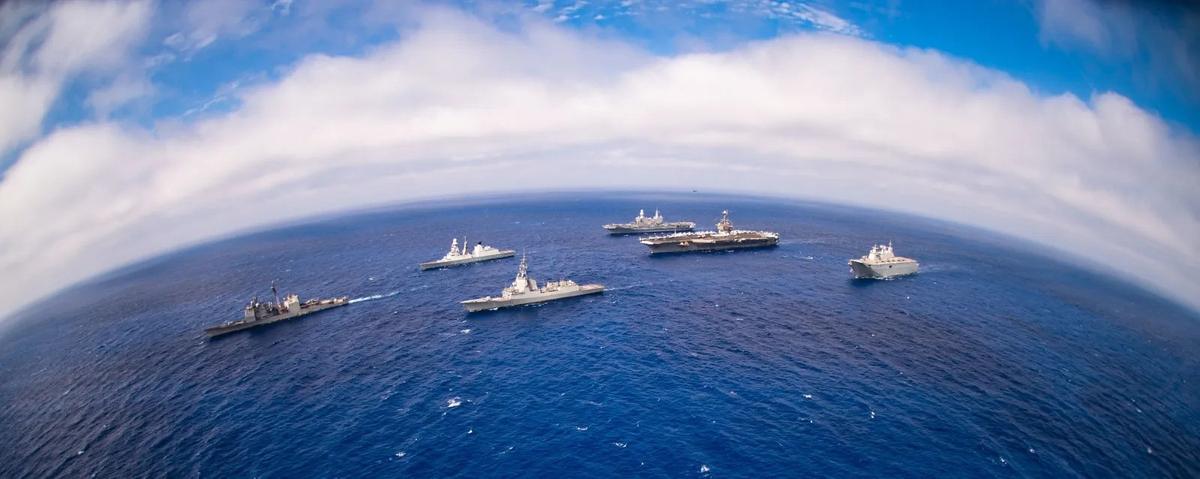
The deployment was reckoned a success. The Navy’s account of the return said that the ship had been a key participant in Neptune Strike and Neptune Shield, had taken part in dual and tri-carrier operations with the French and Italian carriers and their groups, and had made port visits during the cruise.11
Relief and return
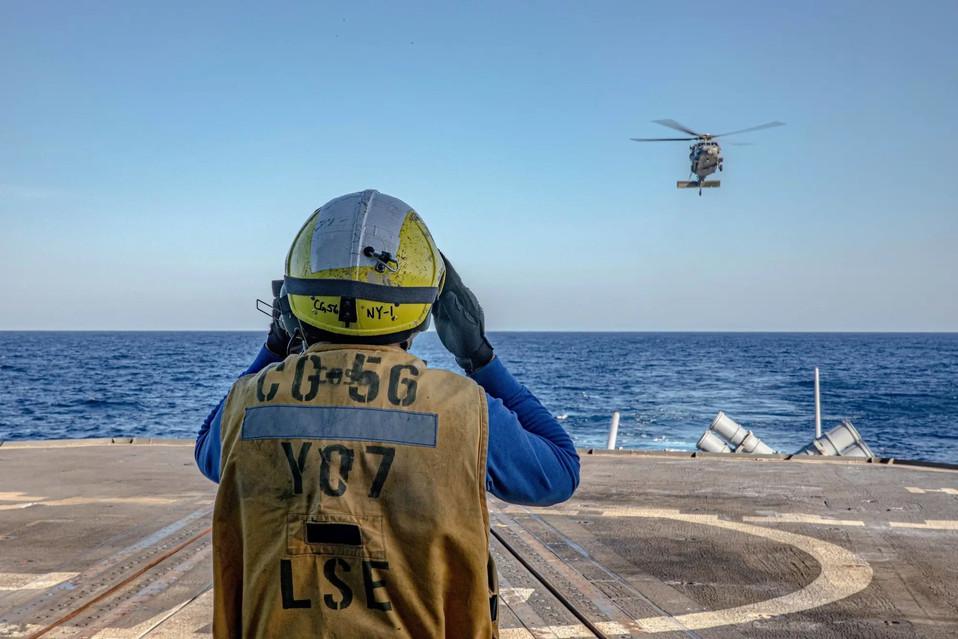
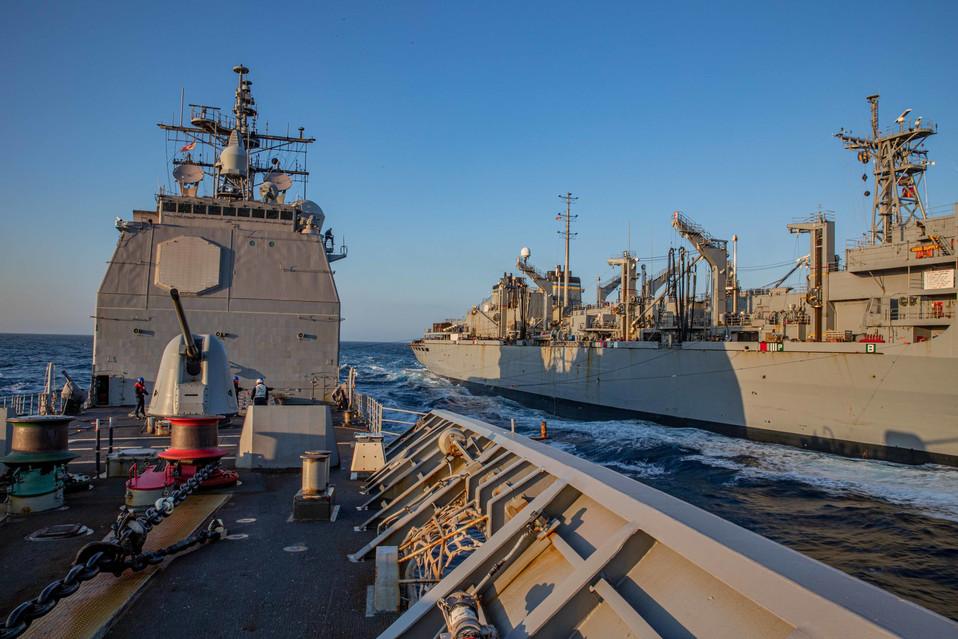
The deployment ended in late August. On 27 August the carrier strike group built around the George H.W. Bush, commanded by Rear Admiral Dennis Velez, relieved the Truman group in the Ionian Sea. Velez, the Navy’s release recorded, said that his group had the watch. He was the same officer who had commanded San Jacinto in 2016 and 2017, on her deployment against the Islamic State and her trip to the Florida Keys.14 The Truman group passed out through the Strait of Gibraltar on 30 August.14
So the cruiser’s last relief at sea came from a carrier named for the man who had commissioned her, commanded by an admiral who had been her captain. Nobody planned that either.
The air wing arrived at its home fields on 5 September. San Jacinto returned to Naval Station Norfolk on 8 September 2022, after a nine-month deployment. Two of the destroyers, Bainbridge and Cole, came home on the ninth, and the Truman herself on the twelfth, having steamed more than sixty-five thousand nautical miles.15
On 12 September she went up the York River to the weapons station at Yorktown to unload her ammunition, a four-day job, and was back at Norfolk on the 16th.17 Every crew before this one had gone to Yorktown to offload knowing they would be back to load again. This crew took the missiles out of her cells for the last time. The launchers that had fired the first Tomahawk of one war and thirty in another came back down the York River empty.
It was the ship’s sixteenth deployment by the Navy’s later count, and her last. More than thirty-four years had passed since she was commissioned at Houston in January 1988. The Navy’s schedule called for her to be retired within the year.
Notes
- Navy release, “USS San Jacinto Holds Change of Command” (navy.mil, story 2628804; SURFLANT release by Ens. James Hussey, dated 21 May 2021): Capt. Christopher Marvin relieved Capt. Edward Crossman aboard the ship at Naval Station Norfolk; Crossman’s six-month deployment with Carrier Strike Group 10; biographical details for Marvin (Pennsylvania State University, 1996; Officer Candidate School, 1998; engineer officer on Chung-Hoon and Chosin). A SURFLANT biography page for Marvin is dated 21 June 2021; the ceremony release is followed here. His executive-officer tours (Halyburton, Somerset) are from the same biography; an earlier command of the littoral combat ship Detroit is not confirmed by the Navy sources consulted. ↩
- Ordinal of twentieth commanding officer: ship’s command list; compare Appendix B. ↩
- Navy release, “San Jacinto Recognized with Navy Unit Commendation,” 3 August 2021 (Lt. j.g. Colton Drake): ceremony of 2 August 2021 at Naval Station Norfolk; Rear Adm. Brendan McLane, commander, Naval Surface Force Atlantic, presenting on behalf of the Secretary of the Navy. ↩
- Ship’s chronology (USCarriers.net): group sail with the Truman group in summer 2021 and a certification exercise in autumn 2021; the dates are not confirmed. ↩
- Stars and Stripes, June 2022, on Congress’s 2021 refusal to approve retirement of seven cruisers and the Navy’s being forced to keep two. Ticonderoga class: 27 ships built; Aegis combat system (general naval references, e.g. Friedman, U.S. Cruisers; Greiner, Warship Pictorial 35). ↩
- A 2021 Navy message on planning to decommission San Jacinto and Lake Champlain, reported secondhand; its text and date were not seen. ↩
- Navy fiscal year 2023 budget request, March–April 2022 (24 ships proposed for retirement, including the cruisers Bunker Hill, Mobile Bay, San Jacinto, Lake Champlain and Vicksburg; San Jacinto and Lake Champlain proposed as Logistics Support Assets; the other three out of commission in reserve; all remaining cruisers to be retired by fiscal year 2027), as reported by U.S. Naval Institute News and Stars and Stripes; fiscal year 2023 inactivation schedule (San Jacinto, 30 June 2023, LSA). The Navy’s own report to Congress, Office of the Chief of Naval Operations (OPNAV N9), Report to Congress on the Annual Long-Range Plan for Construction of Naval Vessels for Fiscal Year 2023 (18 April 2022), has been read: its introduction gives the 24 ships and the five cruisers and the Navy’s reasons (premier air-defense command-and-control role passing to Flight III destroyers; average age 35; poor reliability, affordability and lethality; cost of repairing poor material condition; legacy sensors and hull, mechanical and electrical reliability), and Table A4-1 lists San Jacinto and Lake Champlain as LSA at age 35 against an expected service life of 35, Bunker Hill, Mobile Bay and Vicksburg as OCIR in fiscal year 2023, and seventeen cruisers in all from fiscal year 2023 to 2027 (five in 2023, three in 2024, three in 2025, four in 2026 and two, Chosin and Cape St. George, in 2027); footnote 2 states that LSA ships are not retained on the Naval Vessel Register. The table gives fiscal years only; the 30 June 2023 date and the statement that all remaining cruisers would go by fiscal year 2027 rest on press accounts, the table lists seventeen cruisers, and the NAVADMIN has not been seen. The report does not define “Logistics Support Asset” beyond the register footnote; the gloss in the text, ships whose equipment serves as spare parts for others of the class, is a general description. ↩
- Navy release, “USS San Jacinto Returns Home from 9-Month Deployment,” 8 September 2022 (operations in the U.S. Naval Forces Europe area from 14 December; “key player” in Neptune Strike 22 and Neptune Shield 22; Rear Adm. Paul Spedero Jr.’s remarks); Military Times, 12 September 2022 (Truman got underway 1 December 2021; Bainbridge, Cole, Gravely, Jason Dunham; Carrier Air Wing 1); Navy release, 12 September 2022 (Destroyer Squadron 28; Gonzalez and Forrest Sherman still deployed). The ship’s chronology gives a departure of 2 December 2021. ↩
- Neptune Strike 22, 24 January–4 February 2022, under NATO’s strike forces command (U.S. Naval Institute News; Navy releases): the first U.S. carrier under NATO operational control since the Cold War, as the Navy and press described it. The Tunisian passing exercise of 20 December 2021, the exercise with the Turkish frigate Goksu on 2 February and the tri-carrier operation of 7 February are from the ship’s chronology and Navy photo captions, and their dates are not independently confirmed. ↩
- U.S. Naval Institute News, March 2022 (Carrier Air Wing 1 flying 60 to 90 sorties a day); Navy release, 6 September 2022 (enhanced air policing missions from the Adriatic, Ionian and Aegean Seas). ↩
- Navy Times and Military Times, 8 September 2022 (Spedero: “work horse”; the cruiser and destroyers “every bit as vital” as the carrier); DVIDS / Commander, U.S. 2nd Fleet, 8 September 2022 (dual and tri-carrier operations with Charles de Gaulle and Cavour; cooperative deployment with the Norwegian frigate Fridtjof Nansen, which returned home in May). ↩
- Ship’s chronology (USCarriers.net) for port visits (Rota, Souda Bay, Piraeus, Venice/Marghera, Barcelona, Valletta; Split, 20 July 2022) and the replenishment from USNS Supply on 6 May 2022. ↩
- Neptune Shield 22 is dated variously: May in the ship’s chronology; June in Military Times, 12 September 2022. Summer 2022 exercises with French and Italian ships and with NATO’s Standing NATO Maritime Group 2 (24 July) are from the ship’s chronology alone. ↩
- Seapower magazine and Navy release, late August 2022 (George H.W. Bush Carrier Strike Group relieved the Truman group in the Ionian Sea on 27 August; Truman group through the Strait of Gibraltar on 30 August; Rear Adm. Dennis Velez commanding). That this is the same officer who commanded San Jacinto in 2016–2017 is inferred from the name and not confirmed. ↩
- Navy Times, 8 September 2022; Military Times, 12 September 2022 (Carrier Air Wing 1 home on 5 September; San Jacinto 8 September; Bainbridge and Cole 9 September; Truman 12 September); Navy release, 12 September 2022 (more than 65,000 nautical miles). The count of sixteen deployments is the Navy’s, from the decommissioning release of September 2023; see Chapter 23 notes. ↩
- Contract notice, “71--Remodel Booth Seat, Benches, and Tables,” solicitation N0018921QBOOTH, Naval Supply Systems Command Fleet Logistics Center Norfolk, posted 5 August 2021, responses due 10 August 2021, total small-business set-aside, place of delivery Naval Station Norfolk, USS San Jacinto (CG-56); US Fed News Service, 6 August 2021 (ProQuest 2558743855). The notice does not describe the space or record an award. ↩
- uscarriers.net chronology for USS San Jacinto (CG 56) (archived 5 March 2026), entries for March 2021 to September 2022: underways off the Virginia Capes in March and May 2021; a three-week group sail with the Truman group ending 1 July 2021; a 29-day COMPTUEX ending 29 October 2021; departure 2 December 2021; replenishment from Truman 9 December; Gibraltar eastbound 14 December and westbound 23 December; Rota, 23 December to 5 January; Souda Bay, 20–31 January; the photo exercise with Truman, Charles de Gaulle and Cavour in the Ionian Sea, 6 February; Piraeus from 14 March; Porto Marghera from 23 April; Barcelona, 16–20 May; Valletta from 26 June; Split (Lora Naval Base) from 20 July; replenishments from USNS Supply on 9 and 17 January, 8 March, 6 and 27 May, 11 June, 1, 9 and 28 July and 10, 21 and 31 August, and from USNS Robert E. Peary on 17 June; Gibraltar westbound 30 August; Berth 2, Pier 6, Naval Station Norfolk, 8 September; ammunition offload at Naval Weapons Station Yorktown, 12–16 September 2022. The compilation’s 17 January entry does not name the supply ship. ↩