Part Four: The Long Peace That Wasn't (1991–2006)
Chapter 16Truman's Cruiser
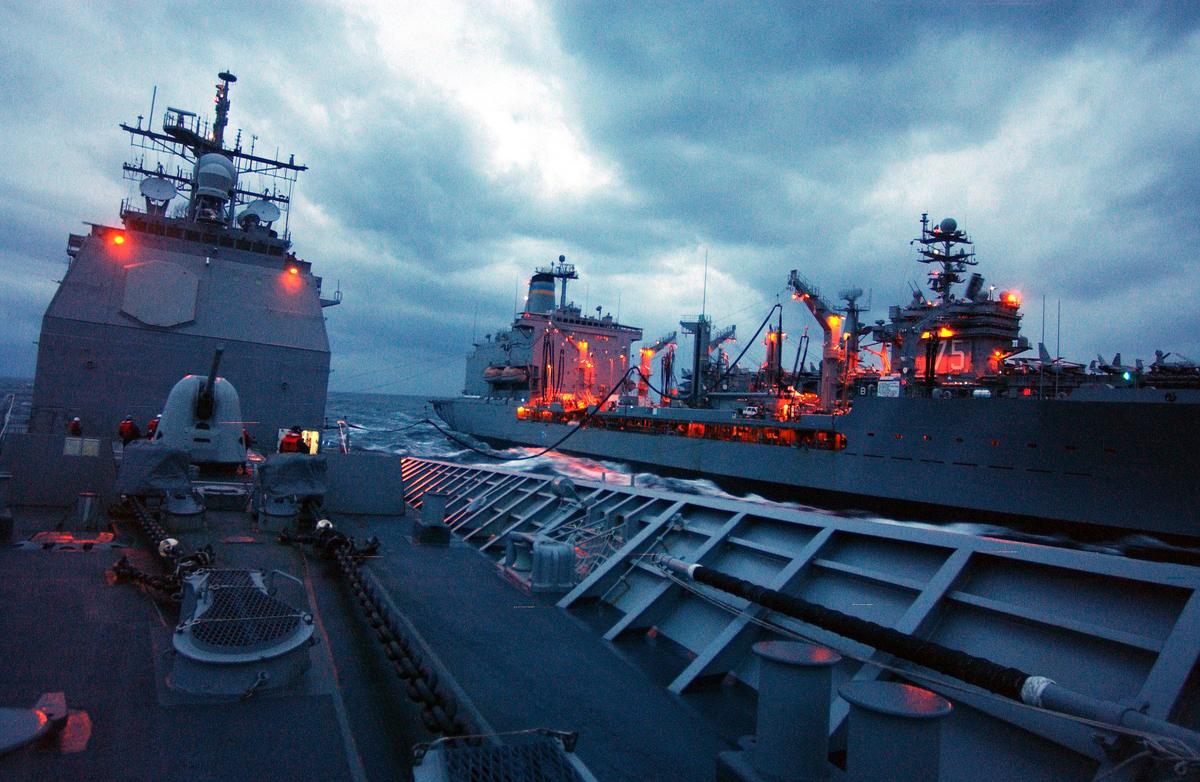
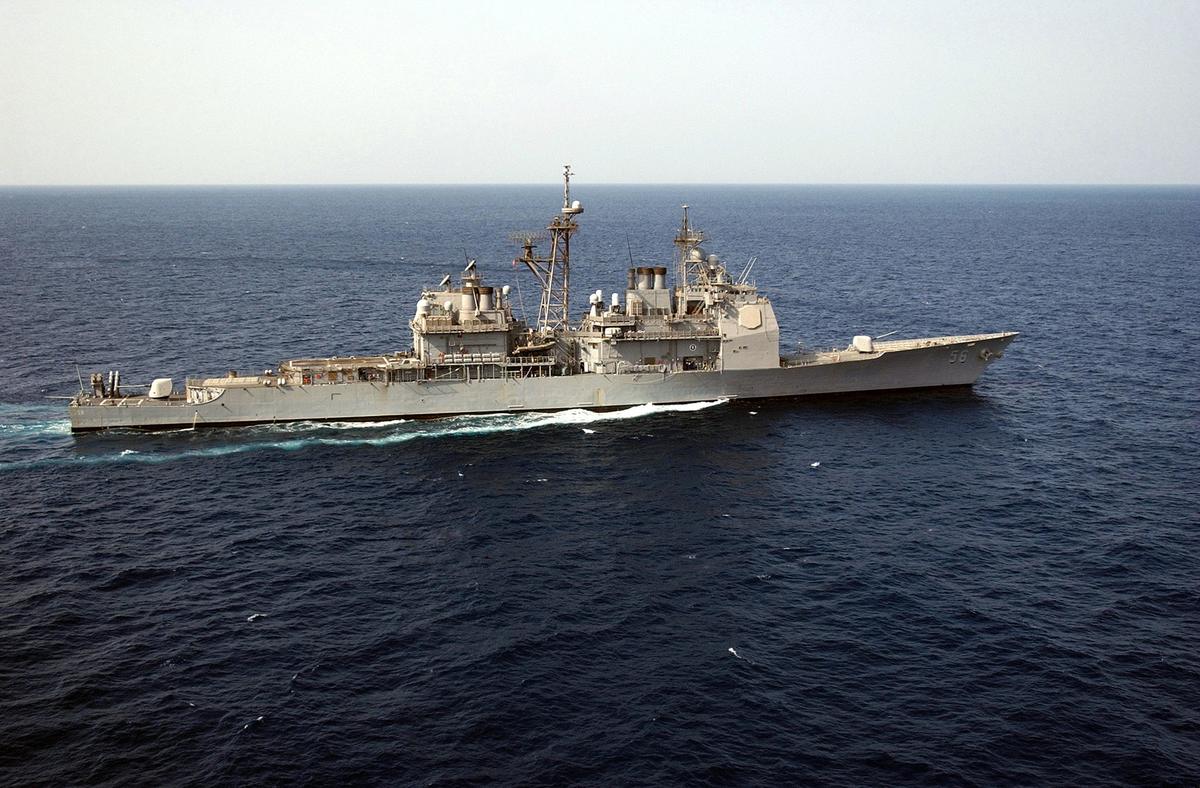
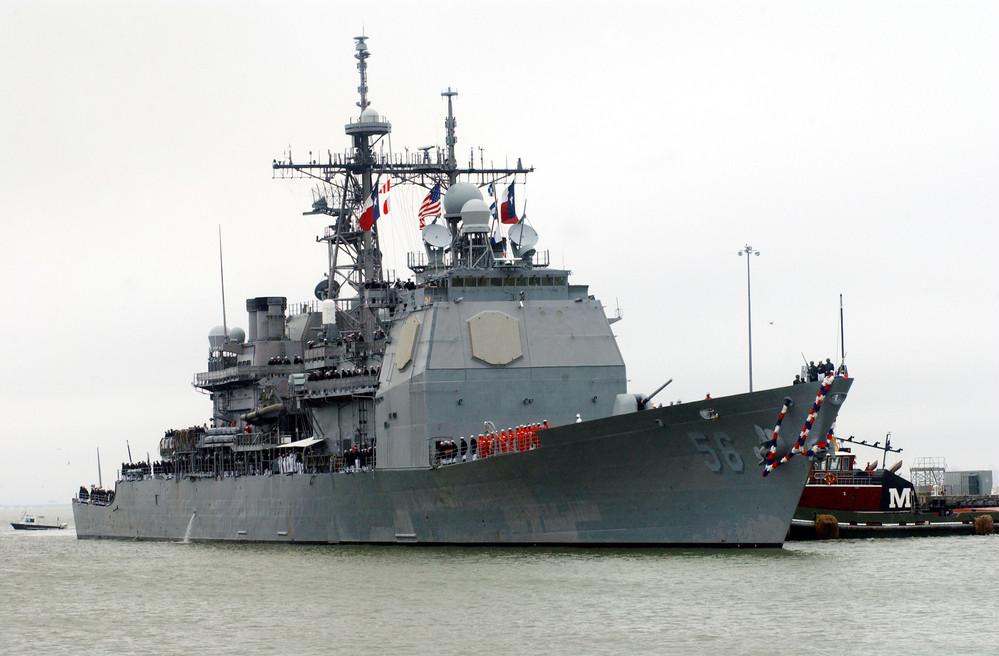
On 12 October 2000, while the destroyer Cole (DDG-67) was refueling in the harbor of Aden, in Yemen, two men in a small inflatable boat came alongside and set off a bomb against her hull. Seventeen of her sailors were killed and forty-two wounded, and only the work of her damage-control teams kept her afloat.13 Cole had come into New York with San Jacinto for Fleet Week the year before. Six weeks after the attack, on 28 November 2000, San Jacinto left Norfolk with the battle group of the carrier Harry S. Truman (CVN-75), on the carrier’s first deployment, for the Mediterranean and the Persian Gulf.1, 14
The crew that sailed that November was the first to go to sea knowing that the danger to a warship might be two men in a rubber boat. Everything the ship carried had been designed to stop missiles and aircraft at a hundred miles. Cole had been crippled from ten feet away, in port, by people who waved as they came alongside. The armed watches, the pier sentries and the rule that every sailor aboard be a qualified rifleman, all of which later crews took for granted, trace to that attack.
She had been assigned to the Truman group in 1998, and for much of the next quarter-century the carrier’s calendar would set hers. A carrier and her escorts train together before they deploy together, so the cruiser’s years ran on the same cycle: months of maintenance, then months of increasingly demanding exercises, then a deployment of about six months, then home and the cycle again. Between 2000 and 2004 the cycle was interrupted twice by wars. (The Navy later renamed such formations, calling them carrier strike groups instead of battle groups.)
A new century at sea
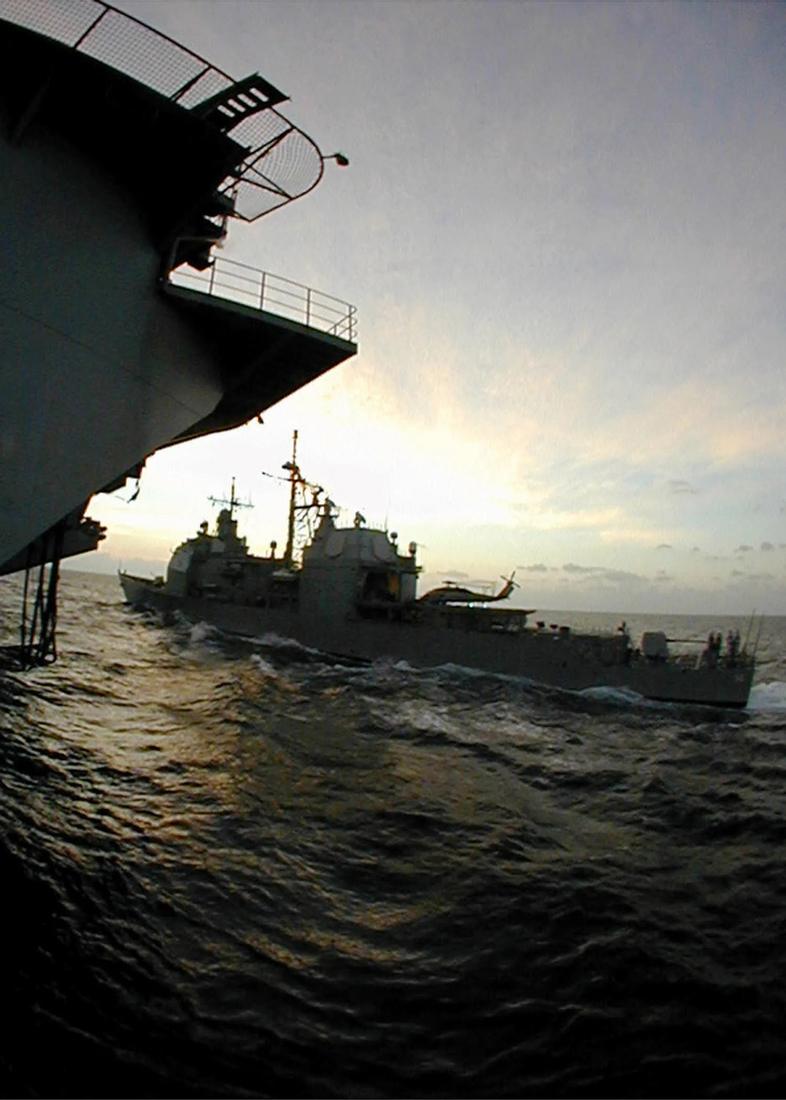
The group that sailed in November 2000 included the destroyers Deyo and Stump and the frigate Carr, each with a helicopter detachment of her own. San Jacinto carried Detachment 8 of Helicopter Anti-Submarine Squadron (Light) 42, whose SH-60B Seahawk flew from her deck throughout the cruise.14 Her commanding officer was Captain Craig E. Langman, who had taken command that April.15 The cruise opened with two large exercises that tested the whole group before it reached its operating area. One was Unified Spirit 2000, a NATO exercise. The other was Joint Task Force Exercise 01-1, the final examination a carrier group takes before it is certified to deploy, in which the carrier, her air wing, her escorts and her supply ships operate against a simulated enemy under the eyes of evaluators. The ship was the group’s air warfare commander for both, responsible for the air-defense picture of the whole force.1
Crew recollection describes the cruise as a happy one. Former crew keep photographs of the ship at Valletta, Malta, in November or December 2000 and of a visit to Dubrovnik. In December she passed south through the Suez Canal, and sailors remember seeing a half-finished bridge reaching out from each bank, the Mubarak Peace Bridge; on the northbound transit five months later it was joined in the middle.2, 17 It is the kind of thing a sailor remembers: a deployment measured by how much of a bridge got built while he was gone.
Eleven men and a dhow
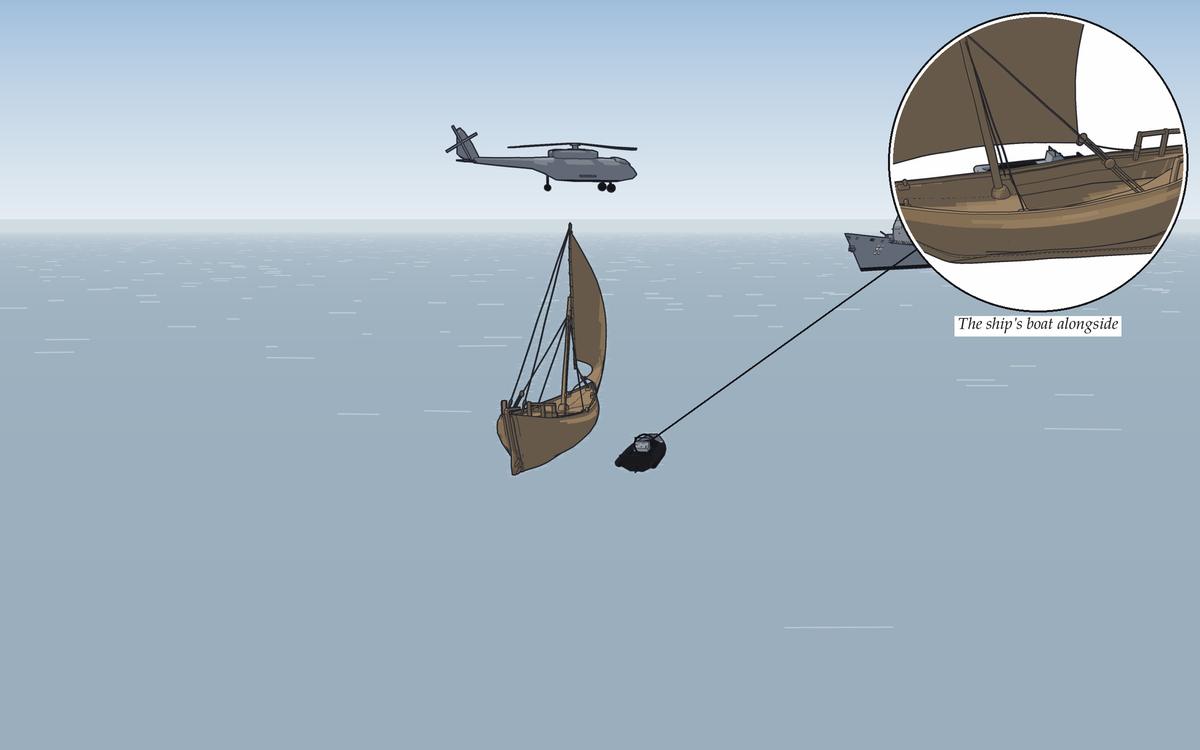
On 30 December 2000, about sixty miles off the coast of Yemen, the ship’s Seahawk on a routine flight found a dhow, one of the wooden trading vessels that have worked the Arabian Sea for centuries. Its engine had failed, and the eleven Yemeni men aboard had been adrift for ten days and had run out of food and water.3
The ship had a sailor who could talk to them, a boatswain’s mate third class who had been born in Yemen and spoke Arabic. The Navy’s account says that the ship’s small boat brought the men food and water, enough to get them back to shore, and the Navy’s aviation chronology for the year entered the rescue among its notable events.3 The ship’s official biography adds that it made her the first American warship to return to Yemen after the attack on Cole.16
Eleven weeks after Yemenis in a small boat had killed seventeen American sailors, an American warship found eleven Yemenis in a small boat and fed them. The man who made it possible came out of deck department. On the day it mattered, a third class boatswain’s mate was the sailor the ship turned to.
She spent part of the deployment in the northern Arabian Gulf on Operation Southern Watch, the patrols that kept Iraqi aircraft out of the skies of southern Iraq.1 On the way home in May she made a full-power run, and a photograph kept by former crew shows her rolling heavily.17 She reached Norfolk on 23 May 2001, after nearly six months away.1, 14
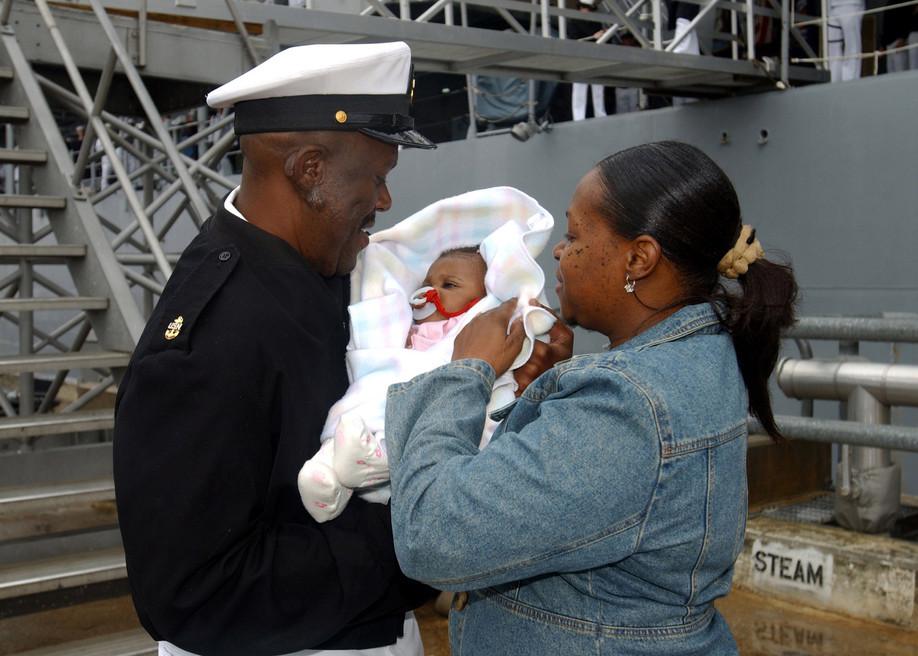
One story from that cruise stayed with the man it concerned. A senior sailor on his last deployment before retirement learned through the Red Cross that his father was dying. With a month left before the ship was due to cross the Atlantic for home, the executive officer authorized his emergency leave, and when the sailor asked to be brought back so that he would not be waiting on the pier when his shipmates returned, the executive officer arranged that too.4 He had spent a career at sea, and he wanted to end it by coming home with his ship.
Between the wars
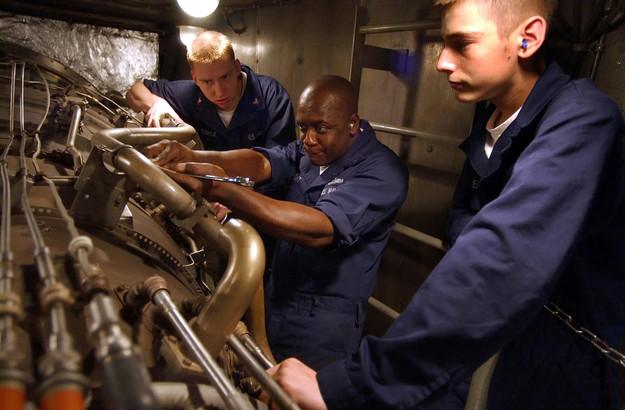
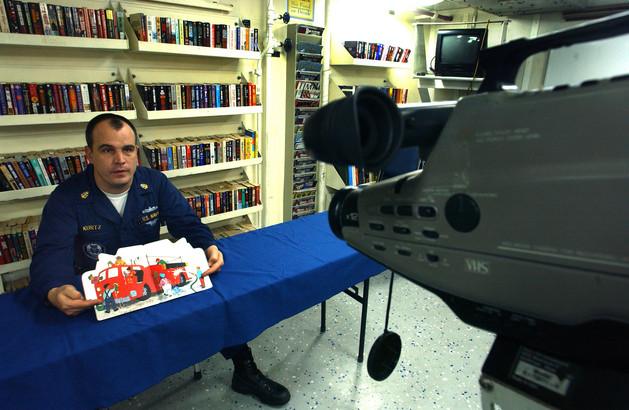
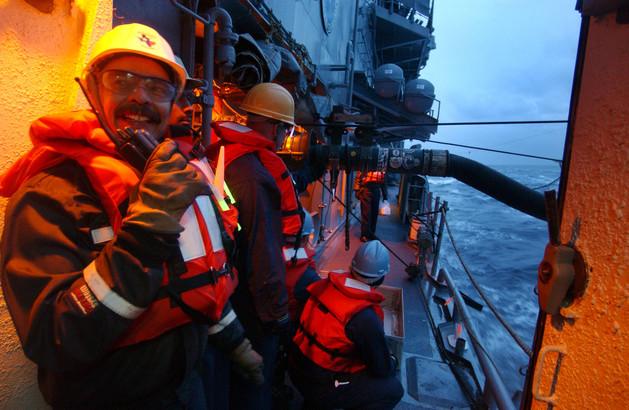
In the autumn of 2001 she went into the hands of the repair yards. On 5 September the Navy’s Supervisor of Shipbuilding at Portsmouth, Virginia, the office that runs ship-repair contracts for the Hampton Roads area, awarded $12,066,498 to the Norfolk Shipbuilding & Drydock Corporation, known as Norshipco, under a notice headed “USS San Jacinto (CG-56), SSP 803-01, EDSRA.” The notice does not spell out the abbreviation. In Navy usage it stands for an extended docking selected restricted availability, a maintenance period in which a ship goes into dry dock, has her hull and underwater fittings overhauled and receives a list of repairs and alterations chosen beforehand. The notice gives no list of work, no dates and no location, so the record does not say how long she was in the yard.11
Six days after the award came the attacks of 11 September. The wife of one of her sailors later remembered that her husband was called that day to a meeting with the ship’s captain.17 The ship herself was in no condition to go anywhere. One sailor remembered that around 2002 a fin was fitted at the ship’s stern, which he said added a few knots and cut down her rooster tail, and others remember the anthrax vaccinations they received aboard in 2002 and 2003.17 On 25 January 2002 Captain John C. MacKercher Jr. relieved Captain Langman.15
Iraqi Freedom
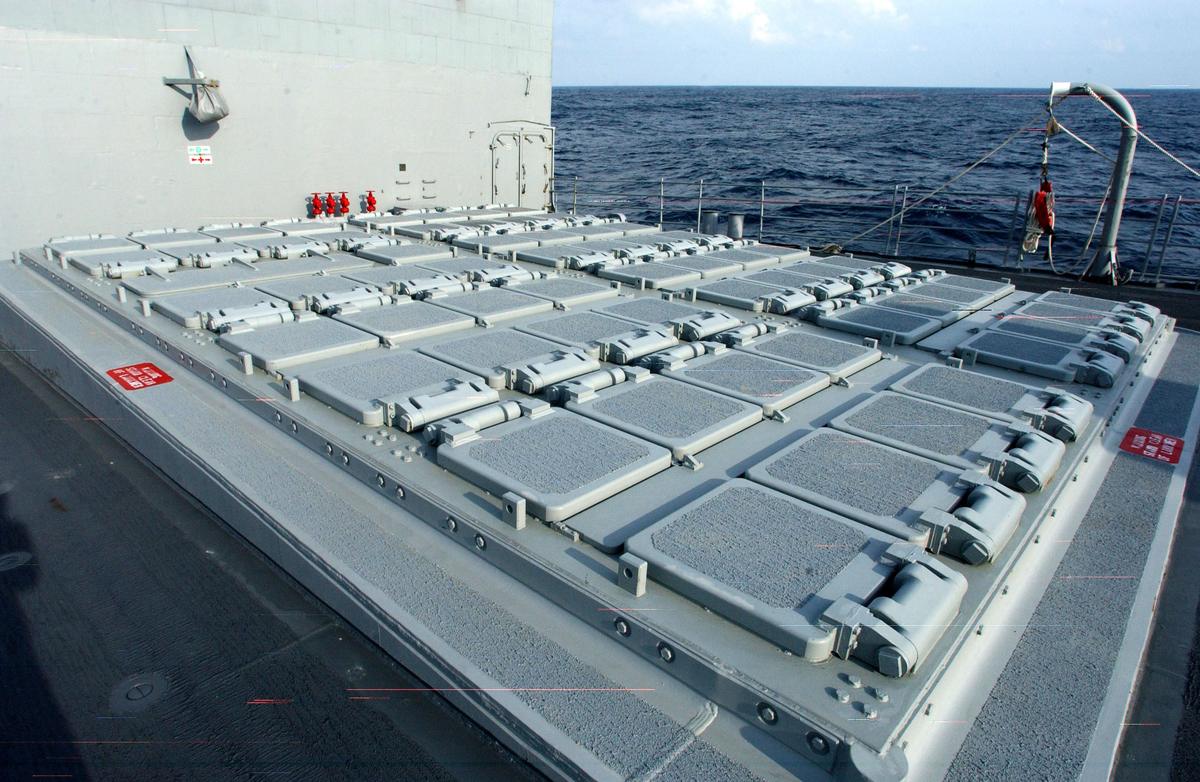
The attacks changed the Navy’s priorities. The war in Afghanistan that followed was called Operation Enduring Freedom, and by the autumn of 2002, as the United States and Britain prepared for war with Iraq, the Truman group was preparing too. It certified for deployment in Joint Task Force Exercise 03-1, and on 5 December 2002 San Jacinto left Norfolk with the group, bound for the Mediterranean in support of Enduring Freedom.5 With her went the destroyers Briscoe, Deyo and Oscar Austin and the frigate Hawes. Her own helicopter detachment was Detachment 6 of HSL-48, the Mayport squadron.6, 14 Captain MacKercher, by the note printed with his later magazine article, commanded her for twenty-five months, an unusually long tour for a ship’s command, and the published list of her captains dates it from 25 January 2002 to 13 February 2004.5, 15
In January a fly-away team from the submarine tender Emory S. Land, then based at La Maddalena in Sardinia, joined her at Trieste, in Italy, to help her crew with maintenance, a visit the tender recorded in her own history for the year. On 31 January she was at Valletta.7 The Truman group went on to the eastern Mediterranean, where, as planning for the war with Iraq reached its climax, it was one of two carrier groups on that side, with Theodore Roosevelt, and carrier aircraft from the Mediterranean flew strikes against northern Iraq.5, 6
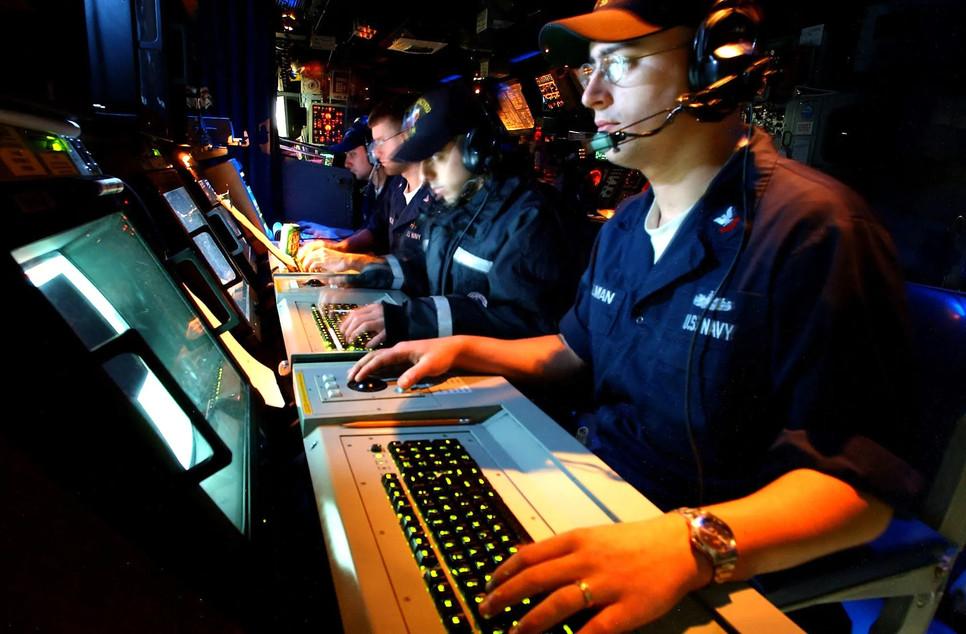
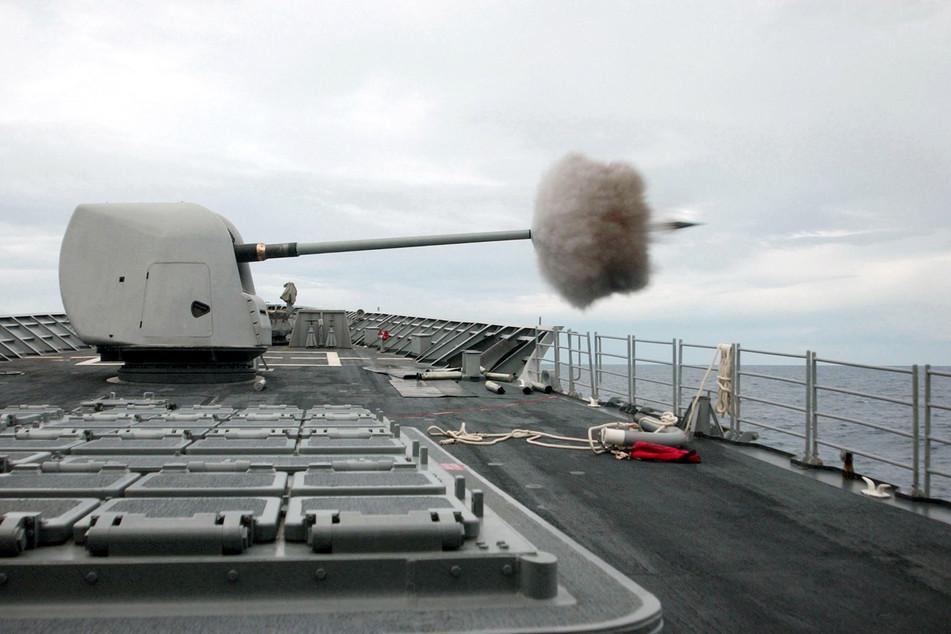
The war began on 20 March 2003. On the night of 21 March American and British ships and submarines in the Mediterranean, the Red Sea and the Persian Gulf fired a large salvo of Tomahawk land-attack missiles at military targets in Iraq. The Navy’s history records that San Jacinto was one of thirty ships and submarines that fired that night, and U.S. Central Command’s list of the Tomahawk-firing ships on 22 March includes her.8 Her official biography adds that during the war she joined the Theodore Roosevelt group and fired thirty Tomahawks, more than any other ship in the Red Sea. It is the only source that gives a number, and it misdates the deployment to December 2003, so the figure stands as the ship’s own claim.16
It was twelve years and two months after the first Tomahawks of Desert Storm. In 1991 nine ships had fired on the first night and the weapon had never been used. In 2003 thirty ships and submarines fired, and it was no longer remarkable. If the biography’s figure is right, the ship fired about twice as many missiles in the second war against Iraq as she had in the first, and the Navy barely recorded it. The painted cell on her missile deck marked the shot that was new. The thirty that followed it twelve years later got no paint.
A postcard survives from those weeks. In April 2003 a sailor wrote home from the Mediterranean and the Red Sea while his brother was serving in the cruiser Cowpens (CG-63) in the Gulf, and their grandmother kept the card with all the letters he sent from two deployments.8 Cowpens was then with the carrier Kitty Hawk.14 San Jacinto came home to Norfolk on 23 May 2003, five and a half months after she left.9, 14
The view from the combat information center
In August 2004 Captain MacKercher published an article in Proceedings, the magazine of the U.S. Naval Institute, under the title “We Have More to Learn from Iraqi Freedom.” Written by the officer who held the command, it is the nearest thing in the record to a first-hand professional account of the cruiser’s part in the war.6 The ship had begun a scheduled deployment in December 2002 as part of the Truman group, he wrote, expecting the Mediterranean to be followed by a turn in the Fifth Fleet, the Navy’s command for the Gulf region, before events in Iraq changed the plan.
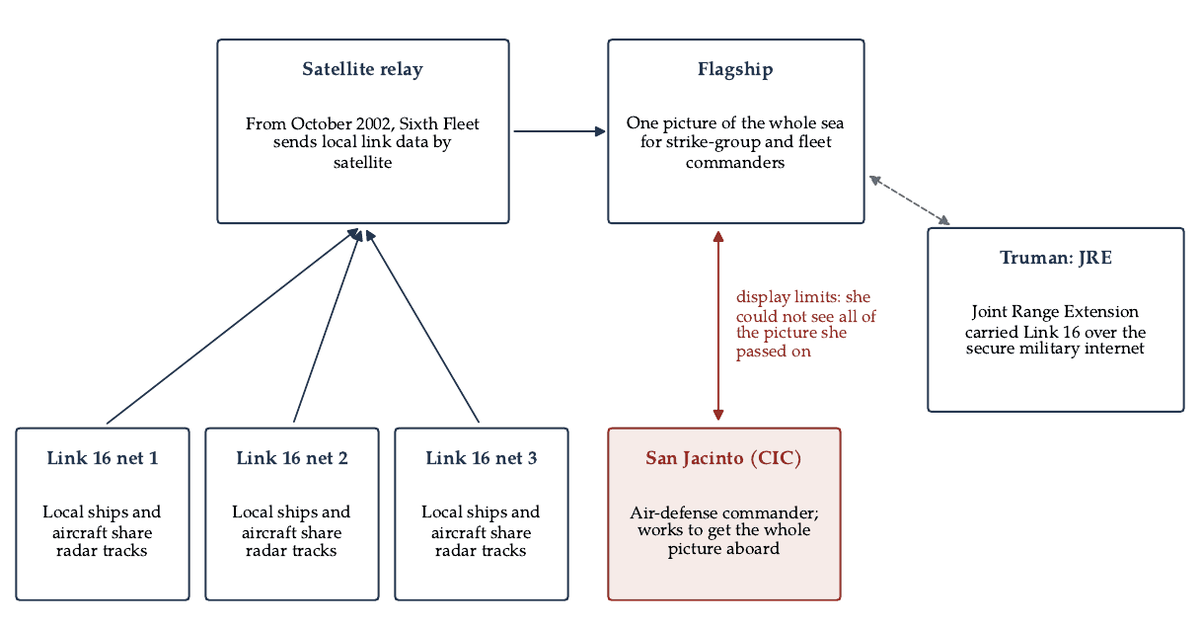
Much of the article concerns information. A tactical data link is a radio network on which ships and aircraft share their radar tracks, so that each can see what the others see, and the one in use was called Link 16. In October 2002 the Sixth Fleet had put into service a Mediterranean-wide arrangement in which data from several local links was sent by satellite to the flagship, giving the strike group and fleet commanders a single picture of the whole sea. Getting that picture onto the cruiser became a major effort for her watch teams in the combat information center and her communications spaces. The picture improved, but because of limits in the Aegis display she could not see all of the air picture she was passing to her commanders. Truman, he reported, had used a device called a Joint Range Extension, which carried Link 16 messages over the secure military internet instead of by satellite, and he urged the Navy to keep developing such systems.6
That is a remarkable admission from the captain of an Aegis cruiser. In 1988 her combat system had been the most advanced in the world. Fifteen years later the ship responsible for the air defense of two carriers could not display everything she was relaying, because the consoles in her combat information center had been designed before the networks that now fed them. It is an early sighting of the problem that runs through the rest of this history: a ship whose hull and weapons were sound while the computers at her center aged faster than the Navy could replace them.
The article also shows what the cruiser’s watch teams worried about. Few Iraqi threats to the fleet had appeared. The likeliest danger, he thought, was a low, slow-flying terrorist aircraft, hard to tell from civilian traffic, whose intentions would have to be judged before it came inside the minimum range of the ship’s Standard missiles. Navy exercises were still built around swarms of attacking jets, so that “to a degree we are fighting the last war.” He found the SH-60 helicopter the best platform for intercepting and escorting slow aircraft flying below 150 knots, since a fighter cannot loiter at such speeds.6 It was the Cole problem in the air. A system built to count a hundred fast targets at once was being asked to read the mind of one slow one.
He described the care taken in the crowded airspace of the eastern Mediterranean, where the group routinely operated with two carrier air wings and an airspace violation could have had political consequences. Every aircraft and ship worked from agreed points marking national and international airspace. The cruiser’s air-defense staff published exact latitudes and longitudes in its daily message of intentions, so that systems that drew coastlines differently would not mislead anyone, and whenever a carrier flying aircraft came within ten miles of a national boundary the air defense commander, the post the cruiser held, warned her by radio and by chat. There were, he wrote, no adverse international reactions to the intense flying by Truman and Theodore Roosevelt before or during the war.
His last subject was the secure chat networks on which, to his surprise, orders were now being passed. At the Navy’s command school in Newport, he recalled, his class had agreed that such networks were acceptable so long as no orders went over them. The war showed him that this had been wishful thinking.6 A war was being run, in part, by officers typing to each other. The article does not describe the ship’s own Tomahawk launches, and no first-hand account of them from the ship has come to light.
BALTOPS 2004
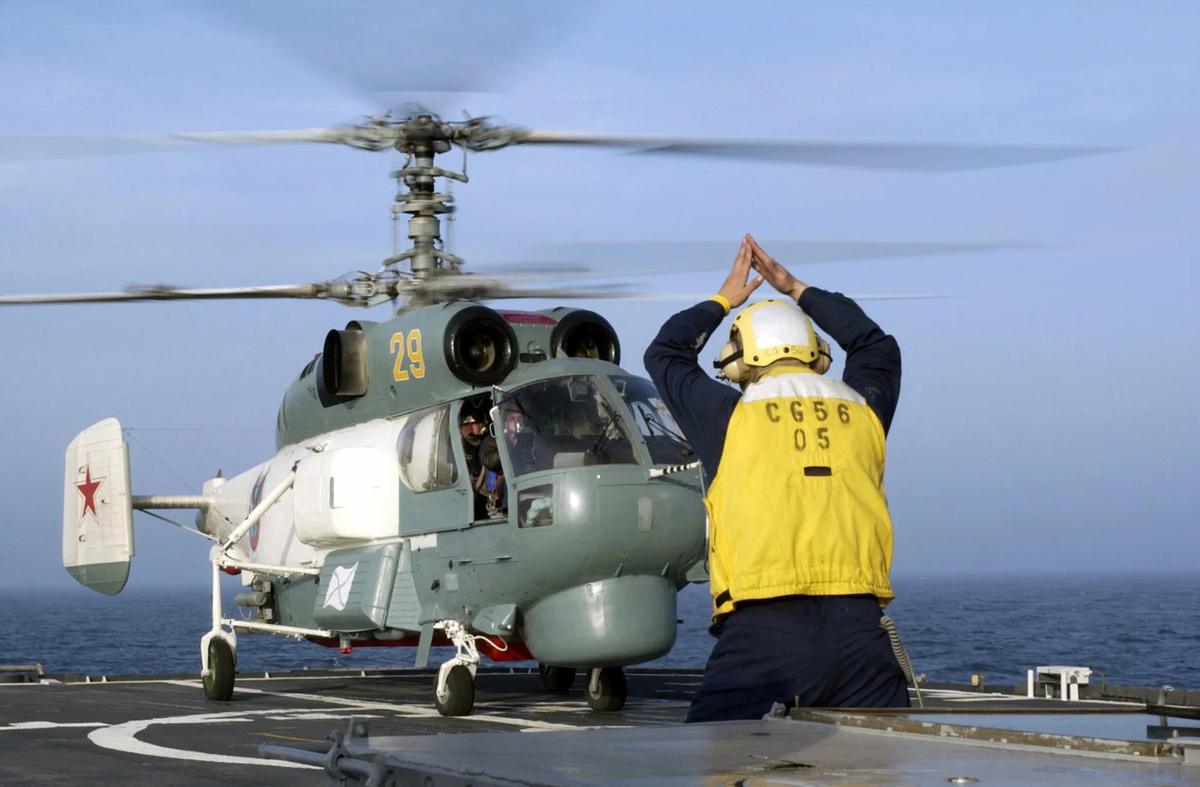
On 13 February 2004 Captain Alan E. Eschbach relieved Captain MacKercher.15 In June the ship moored at Gdynia, Poland, for BALTOPS 2004, the thirty-second exercise of its kind, which ran from 7 to 19 June. The participants were the United States, Canada, Denmark, Estonia, France, Germany, Latvia, Lithuania, the Netherlands, Norway, Poland, Russia and Sweden.10 Poland had joined NATO in 1999, and Estonia, Latvia and Lithuania had joined that March. When the ship was commissioned in 1988, Poland was a Warsaw Pact ally of the Soviet Union and the Baltic states were Soviet republics. Eleven years after her first post-Soviet Baltic exercise, she was in the port of a NATO ally, exercising with a Russian ship among the participants. The ship was sixteen years old, and the map she had been built to fight over no longer existed.
The class in 2003
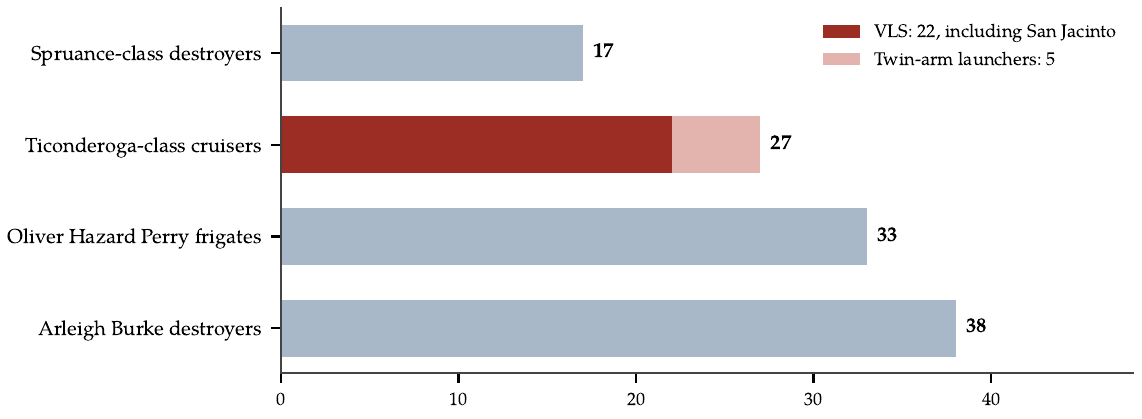
In March 2003, while she was in the Mediterranean, the Congressional Budget Office, the agency that estimates the costs of federal programs for Congress, published a study of the Navy’s surface warships. The fleet’s surface combatants, the term that covers cruisers, destroyers and frigates, then numbered 17 Spruance-class destroyers, 27 Ticonderoga-class cruisers, 33 Oliver Hazard Perry-class frigates and 38 Arleigh Burke-class destroyers, which the study called the ultimate Cold War generation of surface combatants. The oldest Ticonderoga, commissioned in 1983, was twenty years old, the average age of the class was fourteen, and its notional service life was thirty-five years. The first five ships of the class lacked the vertical launching system, and the other twenty-two, San Jacinto among them, carried 122 cells and could fire Tomahawks at targets ashore.12
The Navy’s plan, as the study described it, was to retire the first five ships by the end of 2006, upgrade the combat and reliability systems of the rest, and buy a new destroyer, a new littoral combat ship and, around 2014, a new cruiser to be called CG(X). The study’s own alternative would have upgraded only thirteen of the twenty-seven and retired the rest by 2014, well short of their notional thirty-five years. It does not name San Jacinto.12
It is the first appearance in the record of the argument that would follow the ship for the rest of her life. While she was firing Tomahawks into Iraq, analysts in Washington were already calculating whether ships like her were worth keeping. Thirty-five years from her commissioning in 1988 was 2023, and by the time that year came the Navy’s plans for the class had changed more than once. The new cruiser that was supposed to replace her was never built.
Notes
- Departure on 28 November 2000, Unified Spirit 2000, JTFEX 01-1, Southern Watch and return on 23 May 2001: uscarriers.net chronology. The 28 November 2000–23 May 2001 deployment dates and the embarked HSL-42 Detachment 8: Naval Aviation News, year in review for 2000. The ship’s role as air-warfare commander: ship’s history. The commanding officer, Capt. Craig E. Langman: crew recollection, confirmed by the NavSource list (note 15). ↩
- Crew recollection, consistent with the opening of the Mubarak Peace Bridge at Al Qantara in 2001. ↩
- The 30 December 2000 rescue of 11 Yemeni castaways about 60 miles off Yemen, the Seahawk of HSL-42 Detachment 8, the ten days adrift, the interpreter (a boatswain’s mate third class) and the food and water supplied by the ship’s small boat: DANFS, vol. III; NHHC, United States Naval Aviation 1910–2010, chapter 13 chronology; Naval Aviation News year in review for 2000. The Navy sources do not say that the men were taken off by aircraft and brought aboard. ↩
- Crew recollection. ↩
- Departure on 5 December 2002 for Operation Enduring Freedom, certification in JTFEX 03-1, and return on 23 May 2003: uscarriers.net chronology. The captain, John C. MacKercher, and his twenty-five-month tour: commanding-officer list and the author’s note to the article cited in note 6. The tour’s dates, 25 January 2002 to 13 February 2004, are those of the NavSource roster of commanding officers, which is the only source for them. The Mediterranean employment of the Truman group is general history of the 2003 war, not confirmed by the ship’s own 2003 command history. ↩
- HSL-48 Detachment 6 embarked: Naval Aviation News, year in review for 2003. John C. MacKercher, “We Have More to Learn from Iraqi Freedom,” U.S. Naval Institute Proceedings, August 2004. Vol. 130, no. 8, pp. 74–76 (Professional Notes). The summary in the text is taken from the article itself: the December 2002 deployment and the Fifth Fleet expectation; the Sixth Fleet Link 16 architecture of October 2002; the Joint Range Extension; low, slow-flying aircraft and the Seahawk’s intercept role; airspace management in the eastern Mediterranean with the Truman and Theodore Roosevelt groups; and the secure chat networks. The note printed with the article gives the author’s tour as twenty-five months. ↩
- USS Emory S. Land (AS-39), Command History for 2003 (dated 14 April 2004), chronology for January 2003: fly-away team availability to USS San Jacinto at Trieste. Valletta on 31 January 2003: ship’s deployment history. ↩
- Tomahawk launches on the night of 21 March 2003 among 30 U.S. and British ships and submarines: DANFS, vol. III; U.S. Central Command list of Tomahawk-firing ships, 22 March 2003. The number she fired is not established. The postcard of April 2003: crew recollection. ↩
- uscarriers.net chronology (“nearly six-month deployment”; returned 23 May 2003); the year of that entry is inferred on the page. ↩
- BALTOPS 2004, Gdynia, 7–19 June 2004, the 32nd annual exercise, with the participating nations: uscarriers.net chronology. Accession dates of Poland (1999) and the Baltic states (March 2004) to NATO: general history. ↩
- “USS San Jacinto (CG-56), SSP 803-01, EDSRA,” Commerce Business Daily, 10 September 2001 (Supervisor of Shipbuilding, Conversion and Repair, Portsmouth, Va., contract award CNT 1149; synopsis 0109100356; award dated 5 September 2001, notice dated 6 September; $12,066,498 to Norfolk Shipbuilding & Drydock Corporation). The notice does not expand the abbreviation EDSRA; the expansion given in the text is the usual Navy meaning of the term and is not stated in the notice. ↩
- Congressional Budget Office, Transforming the Navy’s Surface Combatant Force (Washington, D.C., March 2003): fleet composition and the retirement and upgrade plans in the Summary (pp. xiii and following) and the description of the four classes in chapter 1 (pp. 5–6), including the first five Ticonderogas without vertical launching cells, 122 cells in the other twenty-two, the 1983 commissioning of the oldest ship, an average class age of fourteen and a notional service life of thirty-five years. The study does not name San Jacinto; her place among the twenty-two follows from her hull number, CG-56. ↩
- The attack on Cole, 12 October 2000: Naval History and Heritage Command, United States Naval Aviation 1910–2010, vol. 1, chapter 13 chronology; Morris and Kearns, Historical Dictionary of the United States Navy (2011), Chronology, 2000. Cole in New York with San Jacinto in May 1999: see the notes to Chapter 15. ↩
- Battle group composition and deployment dates: Naval Aviation News, year in review for 2000 (published July 2001) and for 2003 (published July 2004), tables of battle group and helicopter detachment deployments: Harry S. Truman, 28 November 2000 to 23 May 2001 (San Jacinto, HSL-42 Det 8; Deyo, Carr, Stump) and 5 December 2002 to 23 May 2003 (San Jacinto, HSL-48 Det 6; Deyo, Hawes, Briscoe, Oscar Austin); Kitty Hawk, 23 January to 6 May 2003, with Cowpens. ↩
- Commanding officers and their dates: NavSource Online, cruiser photo index for CG-56 (archived 23 May 2025), list of commanding officers: Craig E. Langman, 28 April 2000 to 25 January 2002; John C. MacKercher Jr., 25 January 2002 to 13 February 2004; Alan E. Eschbach, 13 February 2004 to 15 July 2005. ↩
- The ship’s official biography, as reproduced on the Seaforces data sheet for USS San Jacinto (CG-56): the return to Yemen after the Cole attack; air defense commander for the Truman group in 2002–03; the move to the Theodore Roosevelt group and thirty Tomahawks, “the most launched by any ship in the Red Sea.” The biography dates that deployment December 2003 in error for December 2002; no other source in the record gives the number of missiles. ↩
- Crew recollection and photographs: Valletta, November or December 2000; Dubrovnik, 2000; the completed bridge seen on the northbound Suez transit; a full-power run with heavy rolling on the way home in May 2001; a sailor’s wife on the captain’s meeting of 11 September 2001; a stern fin fitted about 2002; anthrax vaccinations aboard in 2002 and 2003. ↩